Why water beads up: surface tension in plain English
The same property that lets insects walk on ponds shapes every raindrop on a window. It starts with molecules that prefer each other.
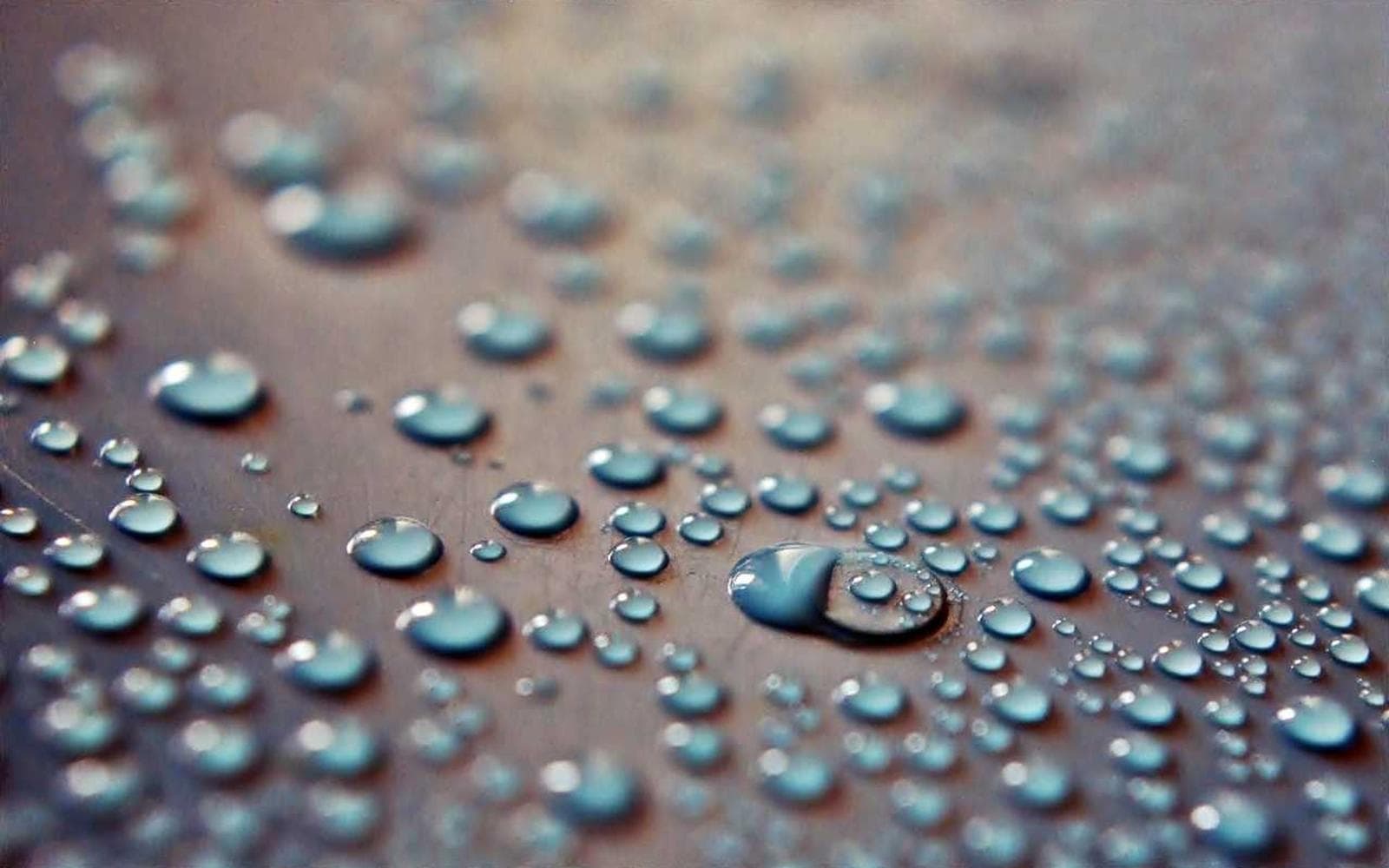
Spill a little water on a waxed car and it forms neat, round beads. Spill the same water on paper and it spreads out and disappears. The difference comes down to how water molecules behave.
Molecules that stick together
Each water molecule is slightly positive on one side and slightly negative on the other. That makes it attract its neighbours, a bond known as a hydrogen bond.
Inside a drop, every molecule is pulled equally in all directions by the molecules around it. At the surface, though, there are no water molecules above, so the surface molecules are pulled sideways and inwards. The result is a thin, stretched “skin” that tries to make the surface as small as possible.
Why that makes a sphere
For a given volume, a sphere has the smallest surface area of any shape. So when nothing else interferes, such as gravity or the surface the water sits on, a liquid pulls itself into a ball. That is why small drops look round, while larger drops flatten because gravity wins out.
Why it beads on some surfaces and spreads on others
Two forces compete: cohesion, the water sticking to itself, and adhesion, the water sticking to the surface.
- On a waxy or oily surface, adhesion is weak. Cohesion wins, and the water gathers into beads.
- On a clean, absorbent surface like paper or cotton, adhesion is strong, and the water spreads and soaks in.
This is why raincoats and car wax work: they leave a surface that water does not like to cling to.
Everyday examples
- Insects such as water striders walk on ponds because the surface “skin” supports their weight.
- Soap reduces surface tension, which is why soapy water spreads more easily and lifts dirt.
- A slightly overfilled glass can bulge above the rim without spilling, held in by the same effect.
Surface tension is a small force, but it explains a surprising amount of what water does around us every day.