Why mountain tops are colder, even though they are closer to the sun
It is a good question with a counterintuitive answer: the sun heats the ground, and thin air cannot hold on to that heat.
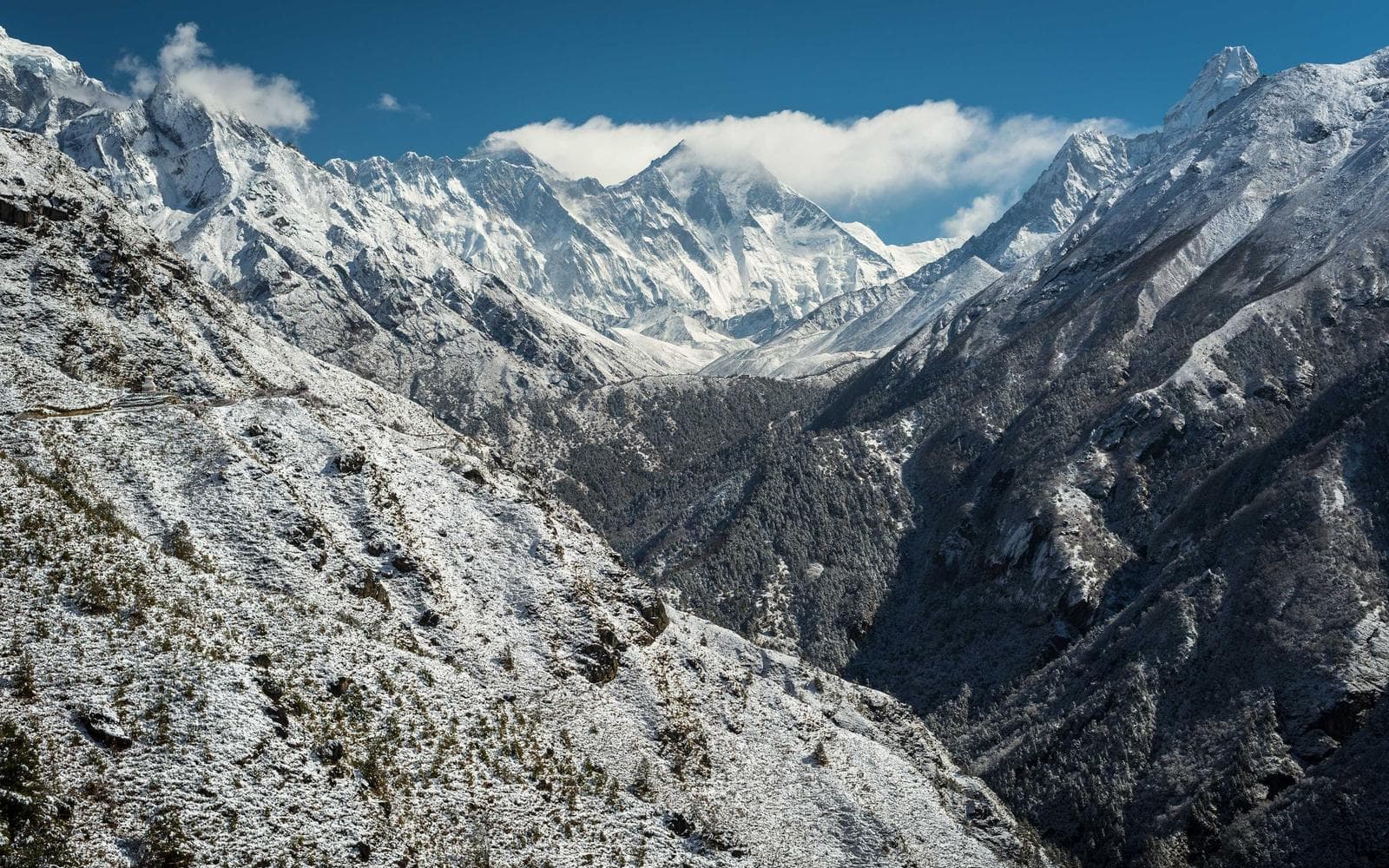
Climb a mountain and the temperature drops, even though you are a few thousand feet nearer the sun. That seems backwards until you think about how air actually gets warm.
The sun heats the ground, not the air
Sunlight passes through the atmosphere largely without warming it. It is the ground that absorbs the energy and then warms the air above it. So the air near the surface is usually the warmest, and the air gets cooler as you move away from that heat source.
Thin air holds less heat
The second reason is air pressure. At higher altitudes there is less air above you, so the pressure is lower and the air is less dense. Fewer air molecules mean fewer to carry heat energy.
When a parcel of air rises, it expands because the pressure around it is lower. Expanding takes energy, and that energy comes from the air itself, so the air cools. Physicists call this adiabatic cooling.
How much colder?
On average, the temperature falls by about 6.5 degrees Celsius for every 1,000 metres you climb (roughly 3.5 degrees Fahrenheit per 1,000 feet). So if it is 20°C at sea level, you can expect around 0°C at 3,000 metres, all else being equal.
That figure is an average. Actual conditions vary with humidity, weather systems and the time of day.
Why this matters for climbers and travellers
- Dress in layers. Temperatures can fall quickly as you gain height, and wind adds to the chill.
- Expect snow at altitude. Even in warm countries, high peaks can stay snow-capped all year.
- Remember the sun is still strong. Thin air filters less ultraviolet radiation, so sunburn is more likely at altitude.
So the mountain is not far from the sun in any way that matters. It is simply far from the warm ground that heats the air.